Through the Window
On photography, distance, and the frame inside the frame.
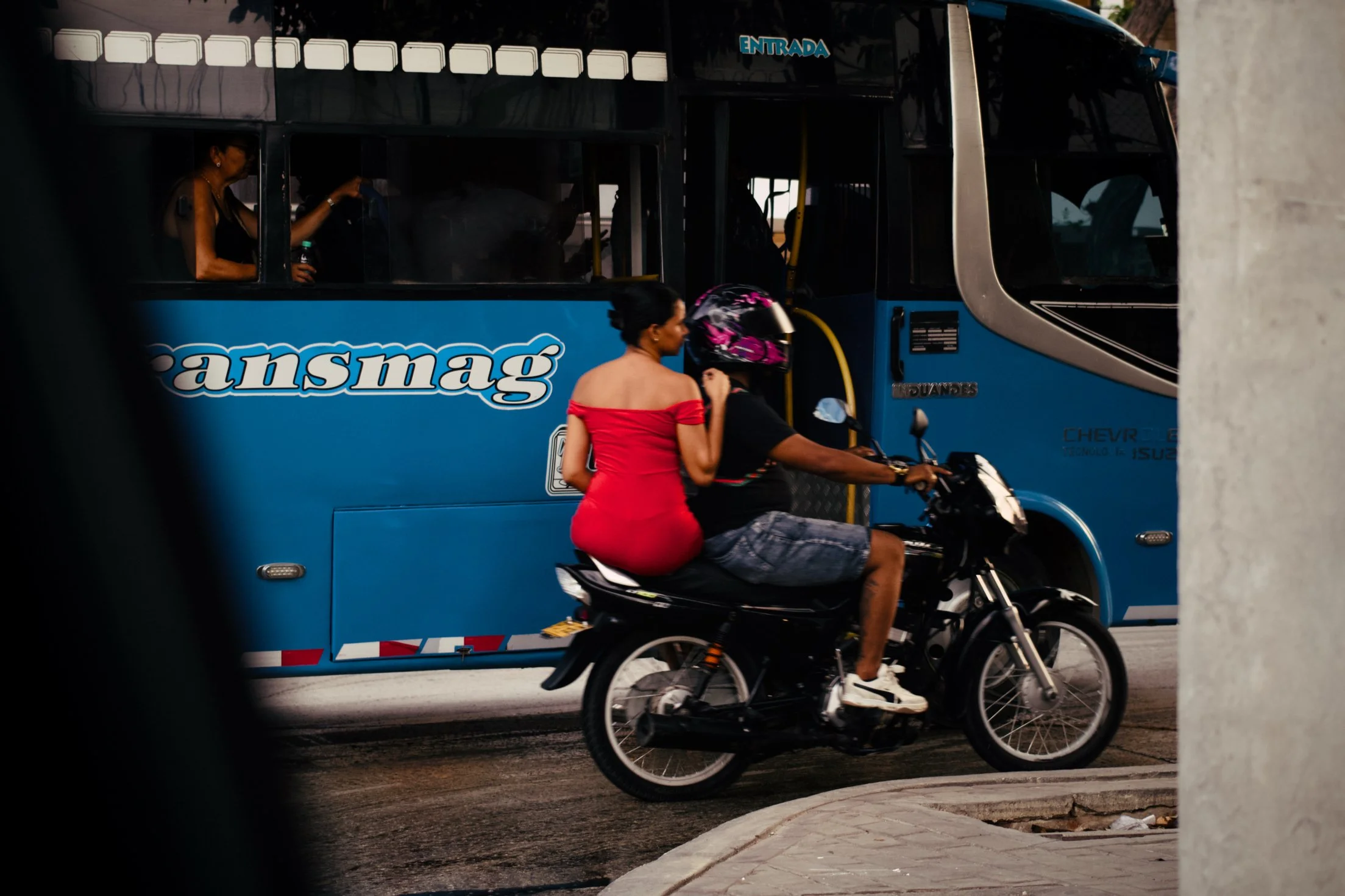
Santa Marta revealed itself slowly through car windows at first.
Heat shimmered above the roads. Motorcycles slipped between lanes like schools of fish, and everywhere people seemed to be sitting still while the city moved around them. The city buzzed constantly, as though every block were negotiating with itself at once.
I found myself photographing through the back seat window more than almost anywhere else. At first, it was hesitation. Walking openly with a camera made me feel conspicuous, immediately foreign. I did not know where to place myself. I did not yet understand the rhythm of the street, where to stand, how to look, when looking became too much.
The window gave me a boundary.
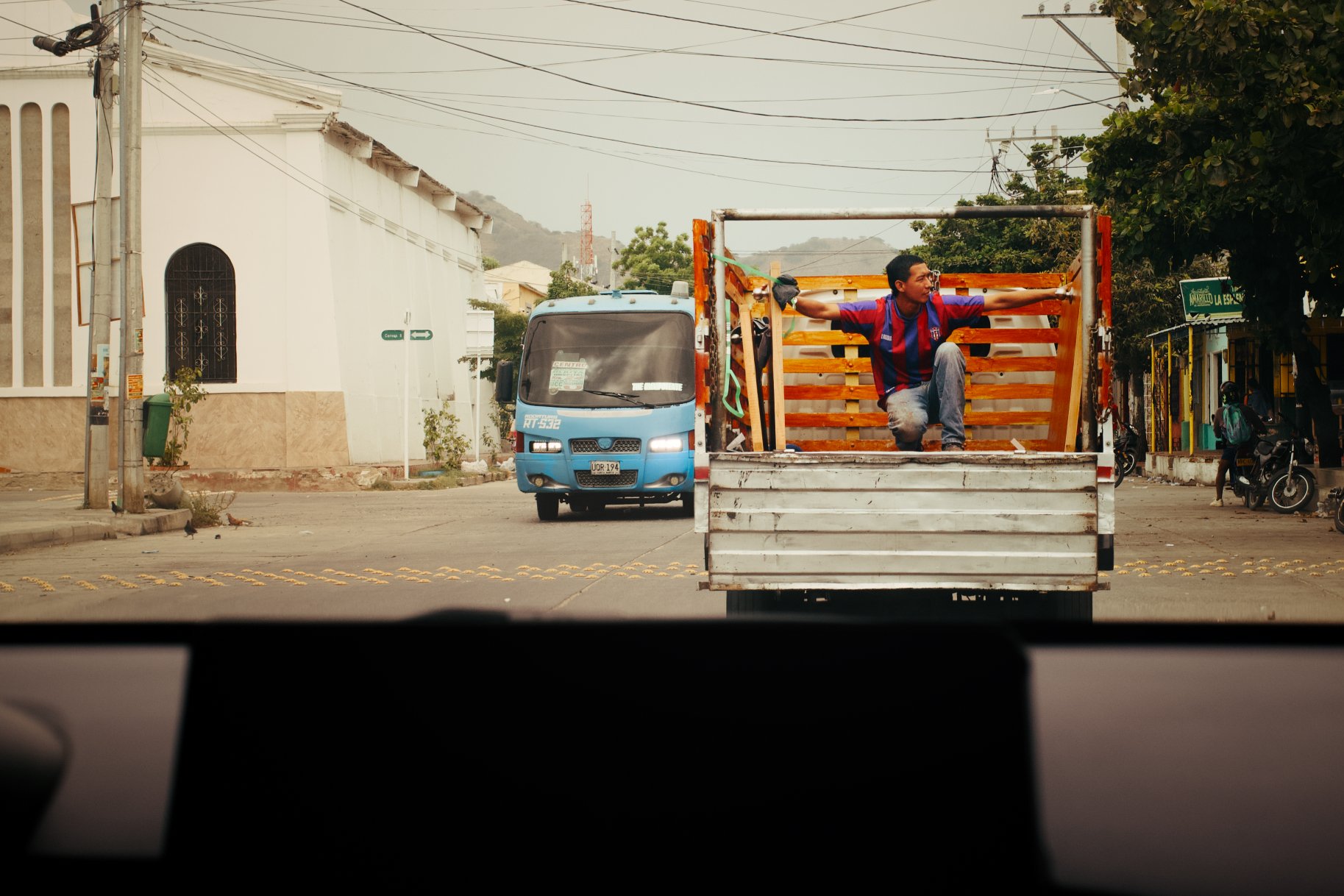
From there, the city arrived in pieces. A green façade for half a second. A child sandwiched between parents on a motorcycle at a red light. Laundry above tangled electrical wires. Vendors moving between cars with water bottles, cigarettes, sunglasses, snacks, phone chargers. Heat on the glass. Dust in the light.
Frames that felt accidental until I looked at them later and realized they had captured something more honest than the photos I had tried to compose deliberately.
Maybe because the window kept something intact. I could look without interrupting. I could notice without turning every scene into a claim. The glass made my looking less direct, and eventually that point of view became part of the image. The speed, the reaction, the half-second of recognition before the frame disappeared.
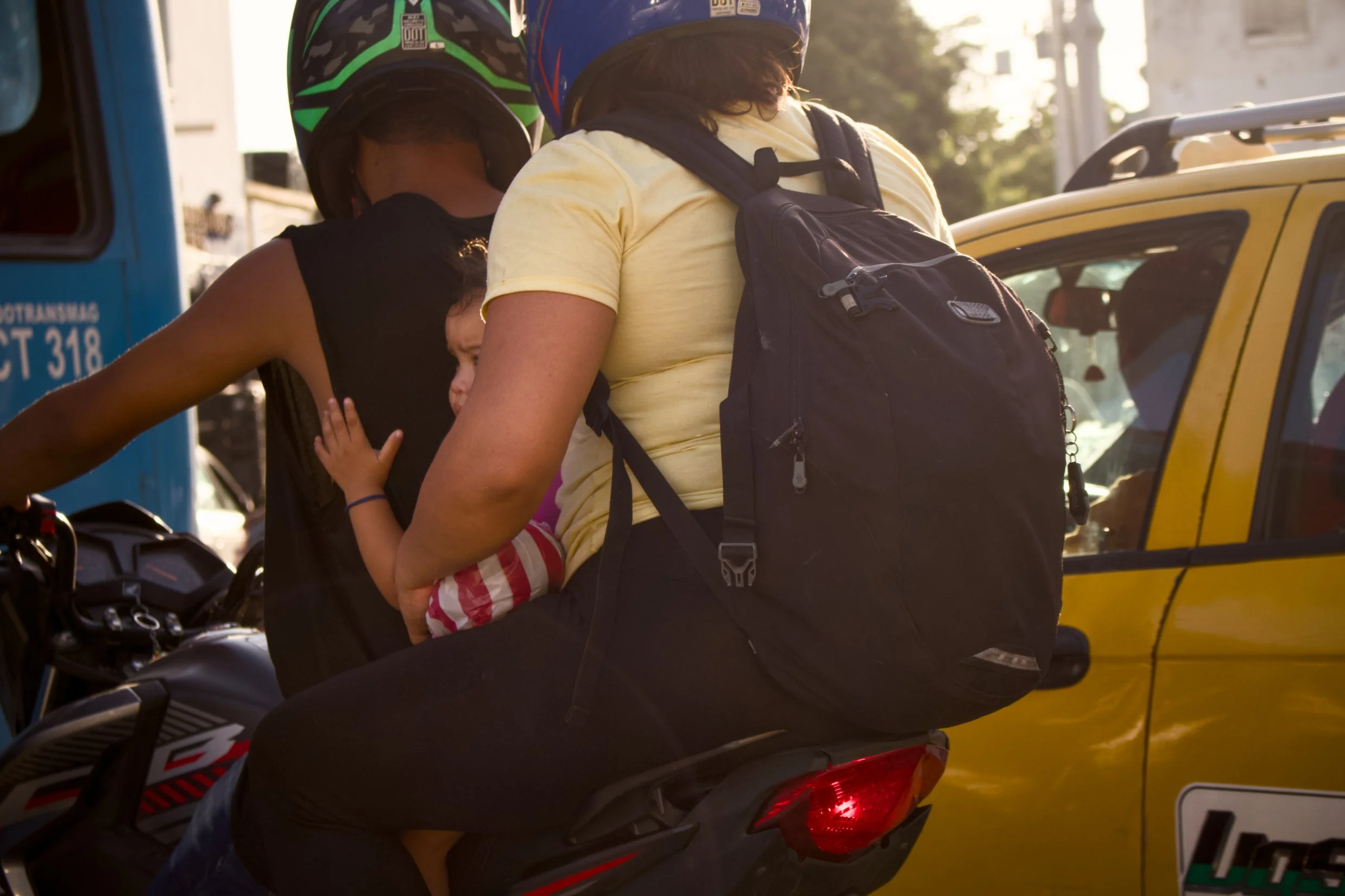
There is always space in a photograph. Even the intimate ones. The image can return evidence, but not the event. A face without the hour around it. A gesture without its before and after. A street corner separated from the noise that made it feel alive.
It can bring us close, but never all the way in.
I trust photographs more when they leave something unresolved. A body crossing the frame before we understand the scene. A face half-turned away. A street glimpsed through reflection, dust, shadow. The feeling that we have arrived slightly too late, or stood slightly too far away, or noticed something we were not meant to solve.
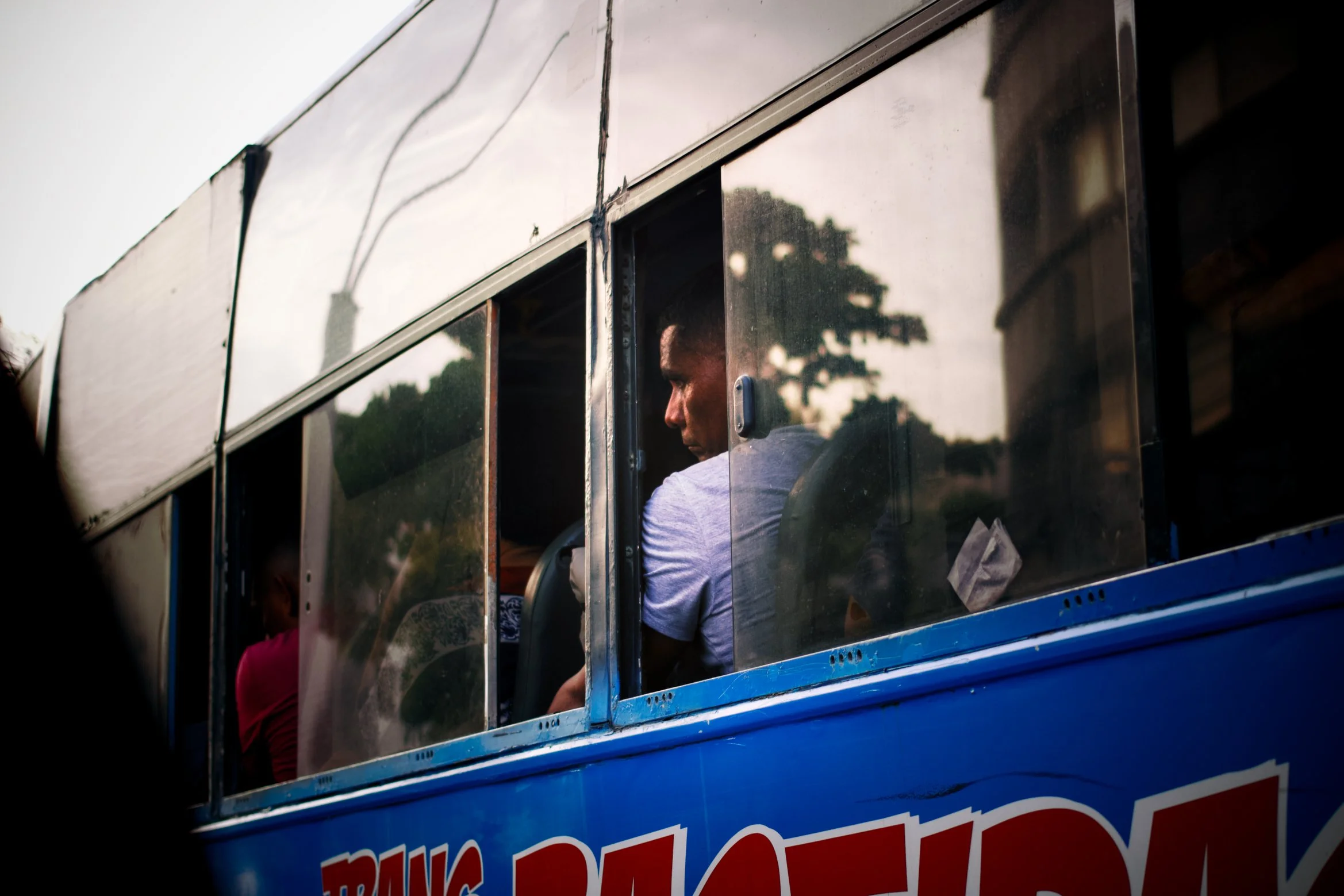
Street photography depends on that uncertainty. It is built from partial encounters. You are close enough to notice the angle of someone’s hand, the posture of waiting, the way heat changes a body in public space. But you are not close enough to know the story.
That boundary matters.
Without it, looking becomes possession too easily. The camera can make a person feel available, a city feel collectible, a moment feel taken simply because it has been framed. Distance resists that. Something remains outside the frame. Something belongs only to the life that continued before and after the shutter.
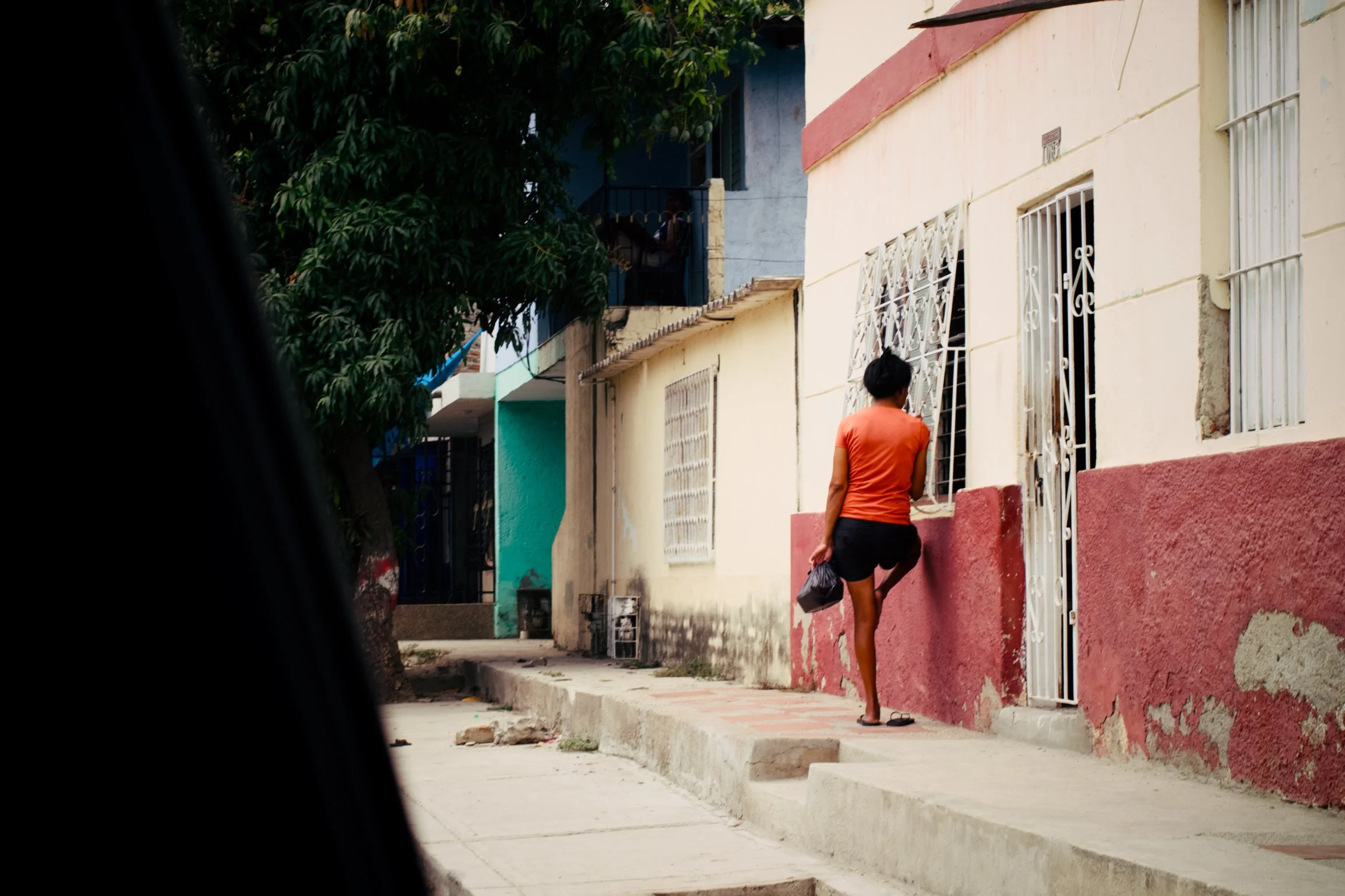
I think that is why I keep returning to the photographs made through the window. They do not give me the whole picture. They could never do that. They give me the briefness of seeing from where I was, slightly outside, moving past, aware of the frame inside the frame.
A little distance left in the image.
Enough for the world to remain partly beyond me.
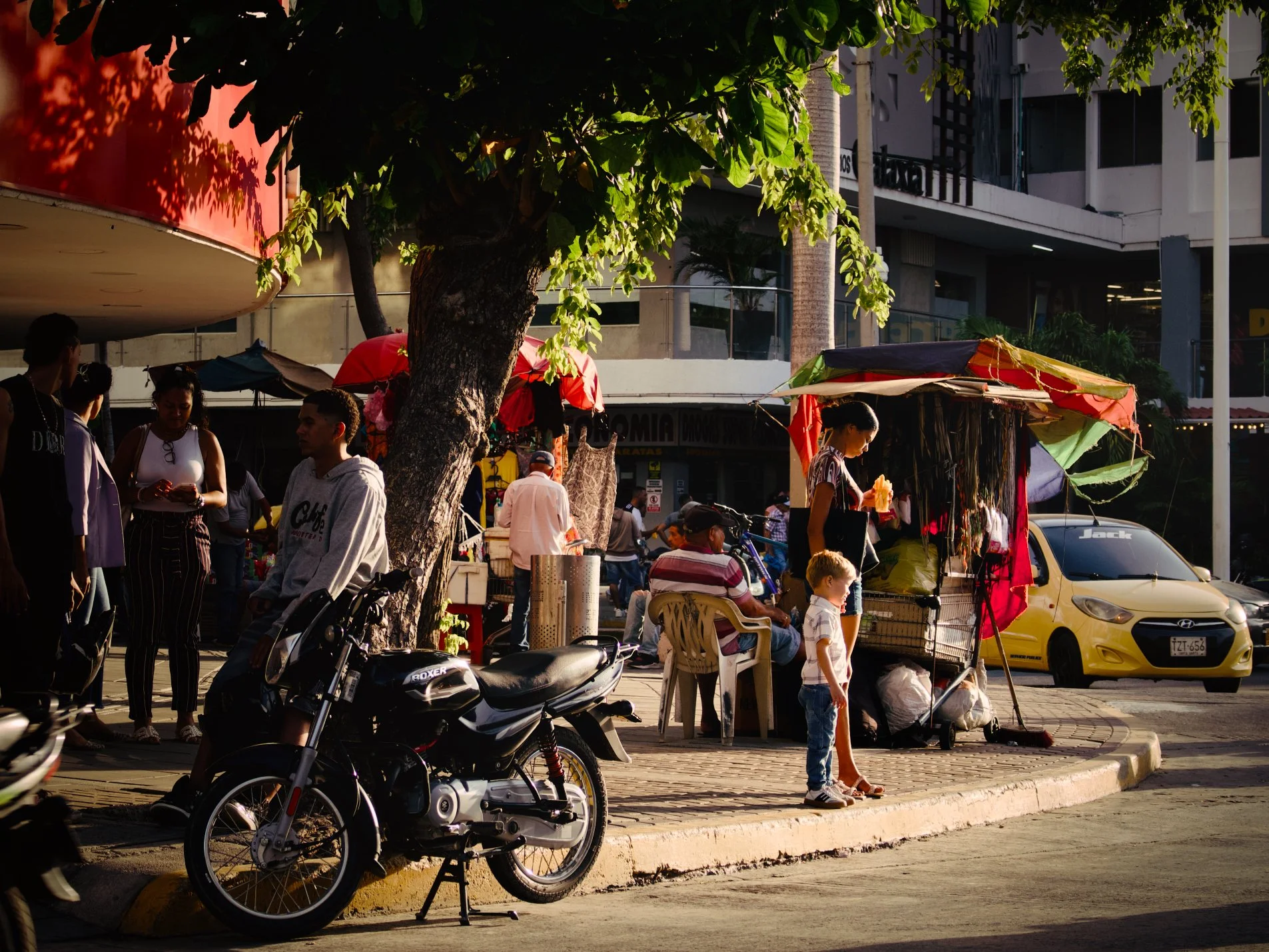
In Santa Marta, the shots I like the most were not the cleanest ones. They were the ones made through obstruction, through motion, through the awkwardness of my own position. They held the feeling of being there without pretending to own it. They kept the heat, the density, the movement, but also the separation. They knew I was only passing through.
The city does not become yours because you found a frame inside it.
A photograph that keeps something back asks something of the viewer. A little patience before naming it. A willingness to notice what is unresolved. To accept that not every image is a message.
Filed Under
Read more essays, notes, and fragments on the small things that keep asking to be noticed.